
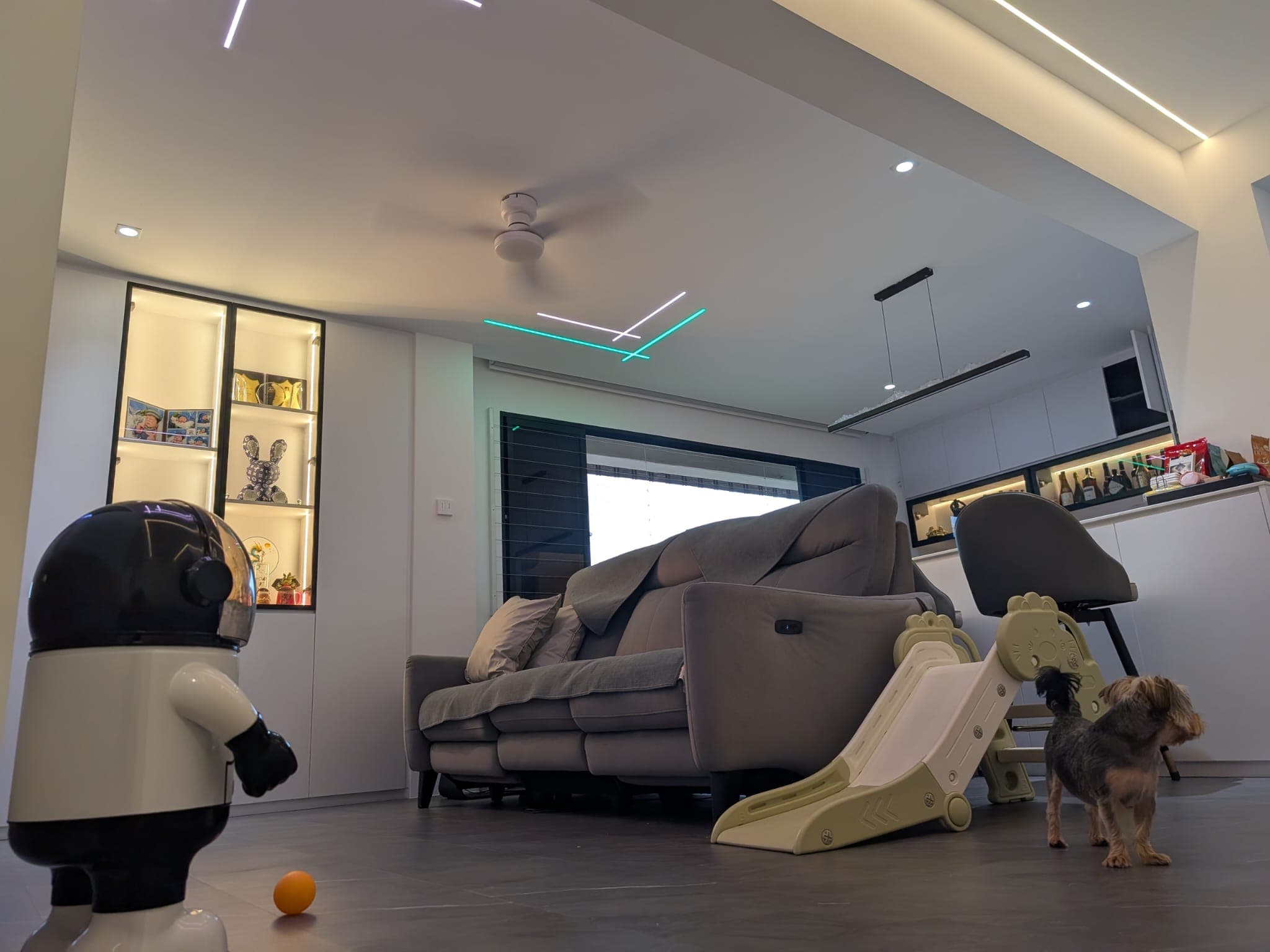
Project: A True Smart Home Experience in Bishan - Resale HDB Family Setup
Type: 5-room Resale HDB Flat
Size: ~1250sqft
Location: Bishan, Central Singapore
Wiring: ✓ Neutral
This project was for a family of 3, with a helper and a dog, 5-room resale flat in Bishan. Before this setup, they already had smart devices, but the experience was not truly smart. Different apps, cloud subscriptions, and internet dependency made daily control inconsistent and frustrating.
They wanted one reliable system that could run the home naturally, without forcing everyone in the house to remember which app controls what. In short, they wanted a home that actually works together as one system.
The Challenge
There were plenty of devices to be integrated, but were scattered across multiple apps and platforms.
-
Too many separate apps for different devices
-
Too much dependency on cloud services and internet connectivity, which is exactly why local control matters
-
A "smart" setup that still felt manual and troublesome in day-to-day life
During implementation, we also had to solve electrical issues that were outside normal smart home programming scope.
-
Traced LED lighting issue to incorrect wiring
-
Identified an LED strip driver that was underpowered and overheating
That second issue was a real safety concern and had to be rectified properly before handover.
Our Solution
We rebuilt the home around Home Assistant as the central brain, so the family could manage everything from one system.
Main integrations in this project:
-
Zigbee switches and lighting controllers, following best-practice protocol planning
-
Tuya devices, using local first integration instead of relying on cloud-only control
-
Daikin air-con through direct integration, not IR blasters, giving Home Assistant true state control over the units
-
LG TV through webOS integration
Because this home has neutral wiring, we could deploy a more stable powered-device layer for switching and lighting control. If you are planning a renovation, this wiring decision makes a big difference, and we explain it in detail here: neutral vs no-neutral smart home wiring.
Daikin Air-Con: Direct Integration, Not IR
The common way to make a Daikin unit "smart" is with an IR blaster. It fires a signal and hopes for the best. No feedback, no confirmation, no idea what the air-con is actually doing.
We skip the IR blaster entirely. The Daikin units in this home are integrated directly with Home Assistant.
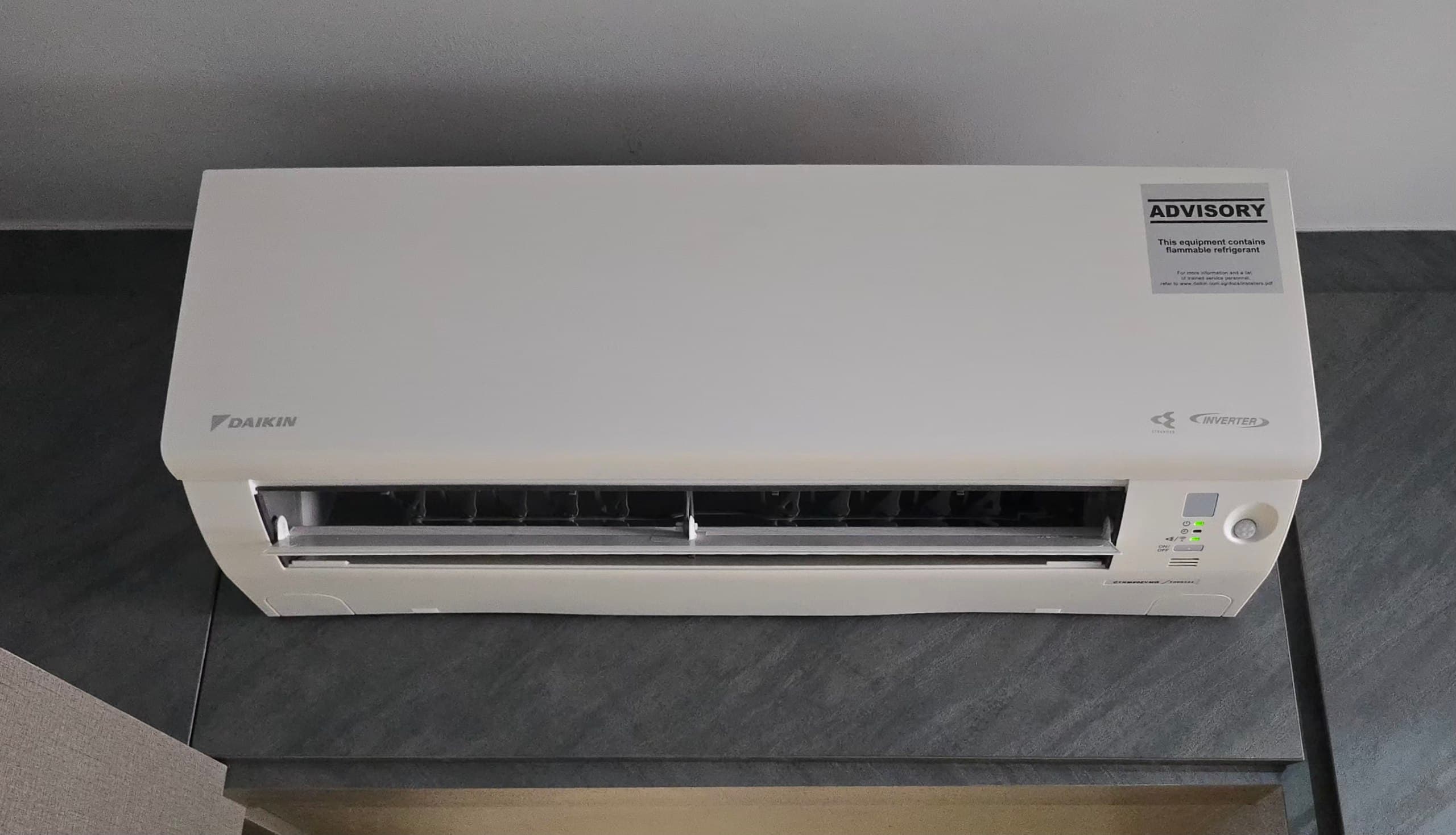
What that means in practice:
- Home Assistant knows the real state of each unit: on/off, temperature, mode
- Someone adjusts the temp with the physical remote? Home Assistant sees the change
- "Turn Off Everything" routine actually confirms the air-con is off, not just assumes it
- Automations stay in sync, even when someone uses the original Daikin remote
IR control works when you are in the room. Direct integration works when your automations need to be reliable.
Key Features
-
One-tap "Turn Off Everything" routine for leave-home moments. Lights, air-con, and devices all confirmed off in one go, based on the same principles behind practical everyday automations
-
Decoupled switch design for smart lighting points. Selected LED lighting stays smart and responsive while physical switches still work naturally for everyone in the household
-
Unified control flow for family and helper, reducing app hopping and confusion
Now Everything Works Together
Every device in this home now talks through one system. The family can mix and match them into routines that fit their life:
-
Karaoke mode: one tap to dim the living room lights, switch the TV to the right input, lower the Tuya blinds, and set the Daikin air-con to keep things cool.
-
Bedtime trigger: double-click the master bedroom switch to turn off common area lights and appliances, turn on air-con in the master bedroom and kid's room. No walking around the house.
The family can create their own anytime according to their habits. As their routines change, they add or adjust automations themselves.
Results
The outcome was straightforward and meaningful for daily life.
- A unified control experience instead of juggling multiple apps
- Much more reliable day-to-day operation and stability
- A setup that feels like one coordinated home system, not a collection of separate gadgets
This is the difference between owning smart devices and actually living in a true smart home.
Want a similar Home Assistant setup for your family home?
We can plan a practical, reliable smart home system around your property type, routines, and existing devices.
Plan your smart home project